Hotel employees can be taught how to carry a tray, make a bed, check in a guest, pour wine, use a property-management system and follow a service sequence.
But can they be taught to care?
That question sits at the heart of one of the most compelling themes in Pierre Barthes’ The Craft of Luxury Hospitality: A Strategic Guide for Hotel Leaders. Drawing on more than four decades in luxury hospitality, Barthes makes a distinction that every hotel leader should consider: skills can be developed, but the spirit of hospitality begins with attitude.
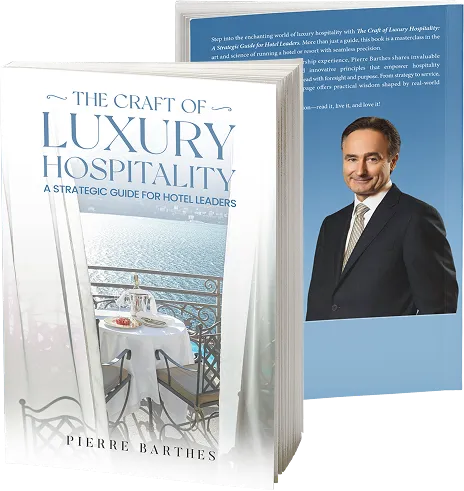
In his words, attitude matters because it cannot be taught in the same way technical competence can. Curiosity, empathy, grace and a genuine desire to serve are qualities that are difficult to teach and should be sought in the individual.
Service Standards Are Only the Starting Point
Luxury hotels rely on standards for good reason.
They create consistency. They establish expectations. They ensure guests receive the level of service a brand promises.
Yet standards alone do not create memorable hospitality.
Barthes argues that training manuals can explain the “how” and the “where,” but they cannot fully teach the “why.” The difference between mechanical service and exceptional hospitality often comes down to understanding the guest and responding with sincerity rather than simply following procedure.
A technically perfect interaction can still feel cold.
A less polished employee with genuine warmth, attentiveness and empathy may create a far stronger emotional connection.
That is why recruitment in luxury hospitality cannot focus only on résumés, qualifications, or previous job titles.
Hire for Attitude, Train for Excellence
The strongest hotel teams begin with selecting people who naturally enjoy helping others.
Once those individuals are in place, leaders have a responsibility to develop them.
Barthes advocates structured training, tailored learning programs, clear operational standards, emotional-intelligence development and continuous feedback. He also emphasizes the importance of creating a culture in which employees feel trusted and empowered rather than simply instructed.
This combination is critical.
Natural warmth without training can lead to inconsistency. Training without warmth can produce robotic service.
Luxury hospitality demands both.
The employee must know the standard, understand the brand, recognize the guest’s needs and still have enough judgment to adapt in the moment.
Hospitality Is Felt, Not Performed
This is where emotional intelligence becomes essential.
Barthes repeatedly connects great service with the ability to recognize emotions, empathize with guests and adjust one’s approach accordingly. Standards define what should happen; emotional intelligence shapes how that interaction is experienced.
And guests notice the difference.
They can tell when a smile is sincere. They know when someone is listening. They feel when a team member is genuinely trying to help rather than merely completing a task.
That emotional layer is difficult to script and impossible to fake consistently.
The Leadership Question
So, can hospitality be taught?
Perhaps not entirely.
But leaders can create the conditions in which it flourishes.
They can hire people with the right attitude, give them the skills to succeed, build their confidence, empower good judgment, recognize exceptional behavior and create a culture where caring for guests is not a performance metric but a shared purpose.
That is one of the most important lessons in The Craft of Luxury Hospitality.
Because in the end, luxury service is not defined only by what employees know how to do.
It is defined by whether guests can feel that the people serving them genuinely wanted to care for them.