When demand weakens, the temptation is almost always the same.
Reduce the room rate. Introduce another promotion. Offer a larger discount than the competitor next door. Fill the rooms today and worry about positioning tomorrow.
According to Pierre Barthes, this instinct can be one of the most damaging decisions a luxury hotel can make.
Drawing on more than four decades of international luxury hospitality leadership, Barthes maintains that premium brands should compete through value, differentiation, memorable experiences and desirability—not simply through price.
Because once a luxury brand teaches guests to buy it primarily because it is cheaper, rebuilding exclusivity becomes far more difficult.
Luxury Cannot Win a Race to the Bottom
Luxury operates according to different rules than commodity markets.
Guests choosing a premium hotel are not simply purchasing a room for the night. They are investing in confidence, recognition, exceptional service, atmosphere, thoughtful details and the assurance that every element of the experience will justify the premium they have chosen to pay.
Aggressive discounting changes that conversation.
Instead of asking,
“Why is this hotel worth the premium?”
guests begin asking,
“How cheaply can I get it?”
According to Barthes, that is the moment a luxury brand begins to weaken its own positioning.
He points to iconic brands such as Ferrari, Hermès and Chanel as examples. Their strength has never depended on becoming the lowest-priced alternative. It has been built on desirability, distinction, consistency and perceived value.
Luxury hotels face the same strategic challenge.
Being Cheaper Is Not the Same as Being Better
Imagine two luxury hotels competing for the same traveller.
One communicates:
“We understand you better. We create more memorable experiences. We deliver exceptional service. We offer something genuinely distinctive.”
The other communicates:
“We provide almost the same experience for less.”
Only one strengthens the brand.
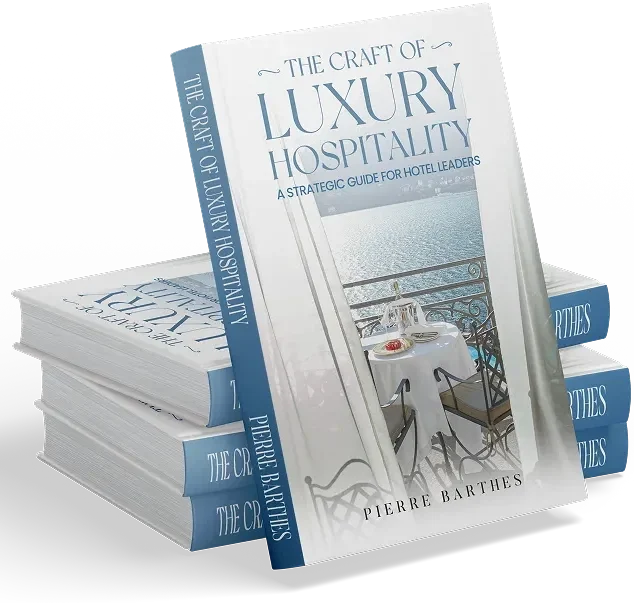
As Barthes argues throughout The Craft of Luxury Hospitality: A Strategic Guide for Hotel Leaders, successful luxury positioning requires a hotel to be meaningfully different, demonstrably better or ideally both.
Price alone can never create that distinction.
Protect the Experience Before Cutting the Rate
There is another danger in competing primarily on price.
Eventually, pricing pressure reaches operations.
Lower room rates often lead to pressure to reduce costs. Cost reductions affect staffing, training, amenities, food quality, maintenance and countless details that guests may never consciously notice but always experience.
Those details collectively create the value that justified the premium in the first place.
The result can become a damaging cycle:
Discount the product.
Reduce the experience.
Weaken the brand.
Discount again.
Strong luxury leadership requires resisting that cycle before it begins.
Give Guests a Reason to Pay More
This does not suggest that pricing should ignore market realities.
According to Barthes, pricing is only one element of a broader luxury brand strategy that also includes positioning, guest recognition, storytelling, operational excellence and consistent service delivery.
The objective is not simply to charge a higher price.
It is to create enough genuine value that the premium becomes entirely justified.
This philosophy forms one of the central themes of The Craft of Luxury Hospitality: A Strategic Guide for Hotel Leaders, where Barthes argues that the strongest luxury brands protect the relationship between brand promise and guest experience rather than pursuing short-term gains that compromise long-term positioning.
The lesson extends well beyond hotels.
Luxury brands are not remembered because they offered the lowest price.
They are remembered because they created value that others could not replicate.
The strongest luxury brands never ask customers to choose them because they cost less.
They give customers compelling reasons to believe they are worth more.